
Advertisement
Cooking with Kids: Part 3 – A Sauce is Worth 1000 Recipes
13 April 2026 · Young cooks
Our series, Cooking With Kids continues with this roundup of sauces and salsas to delight and inspire palates of all ages.
Carolyn Federman is the Founder of the Charlie Cart Project, a program that gets kids cooking and tasting fresh fruits and vegetables in schools and libraries across the United States. Check out the first two articles where she dishes on cooking with kids, tells stories of learning tips and tricks from the one and only Alice Waters, and shares her own hacks from 10 years of food education with Charlie Cart.
The Charlie Cart Project equips kids and families with the skills and confidence to make healthy food choices for life through hands-on cooking programs. With a fully-stocked mobile kitchen – “The Charlie Cart” – and a robust set of recipes and support, the Charlie Cart Project provides schools, libraries, and community organizations with the tools and training to teach kids how to cook and build lifelong health through the power of food.
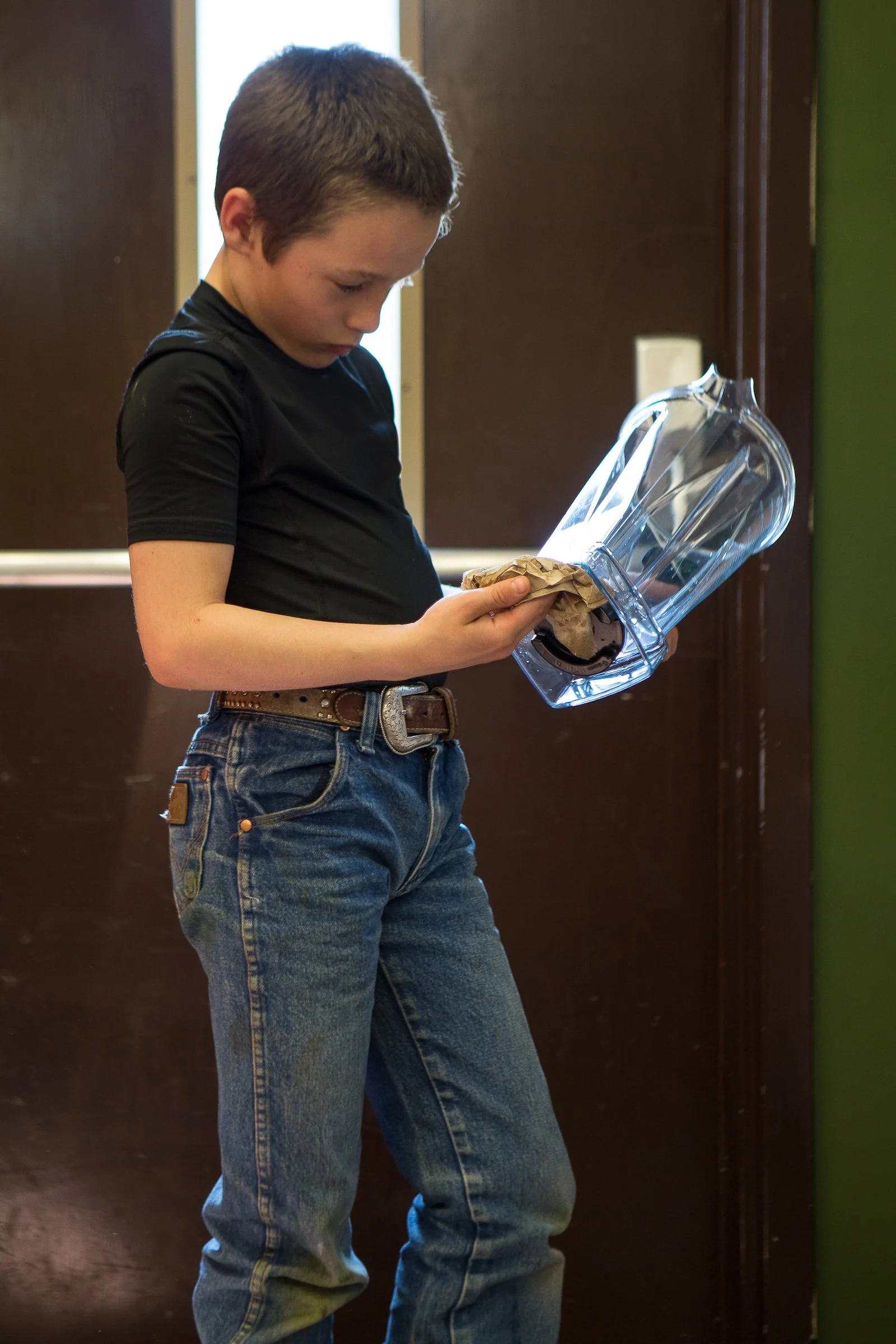
Photo: Marianna Nobre
“Sunday sauce time” is a great way to spend a dedicated hour or two together, and use up the tail end of vegetables too. During the week, a spoonful of any one of these sauces will elevate the most basic meal - from a bowl of steamed rice to simply scrambled eggs to a firework of flavor that will be hard for kids to resist. As Harold McGee explains in On Food and Cooking:
“In addition to their heightened flavor, sauces give tactile pleasure by the way they move in the mouth. Cooks construct sauces to have…the consistency of luscious ripe fruit that melts in the mouth and seems to feed us willingly…”
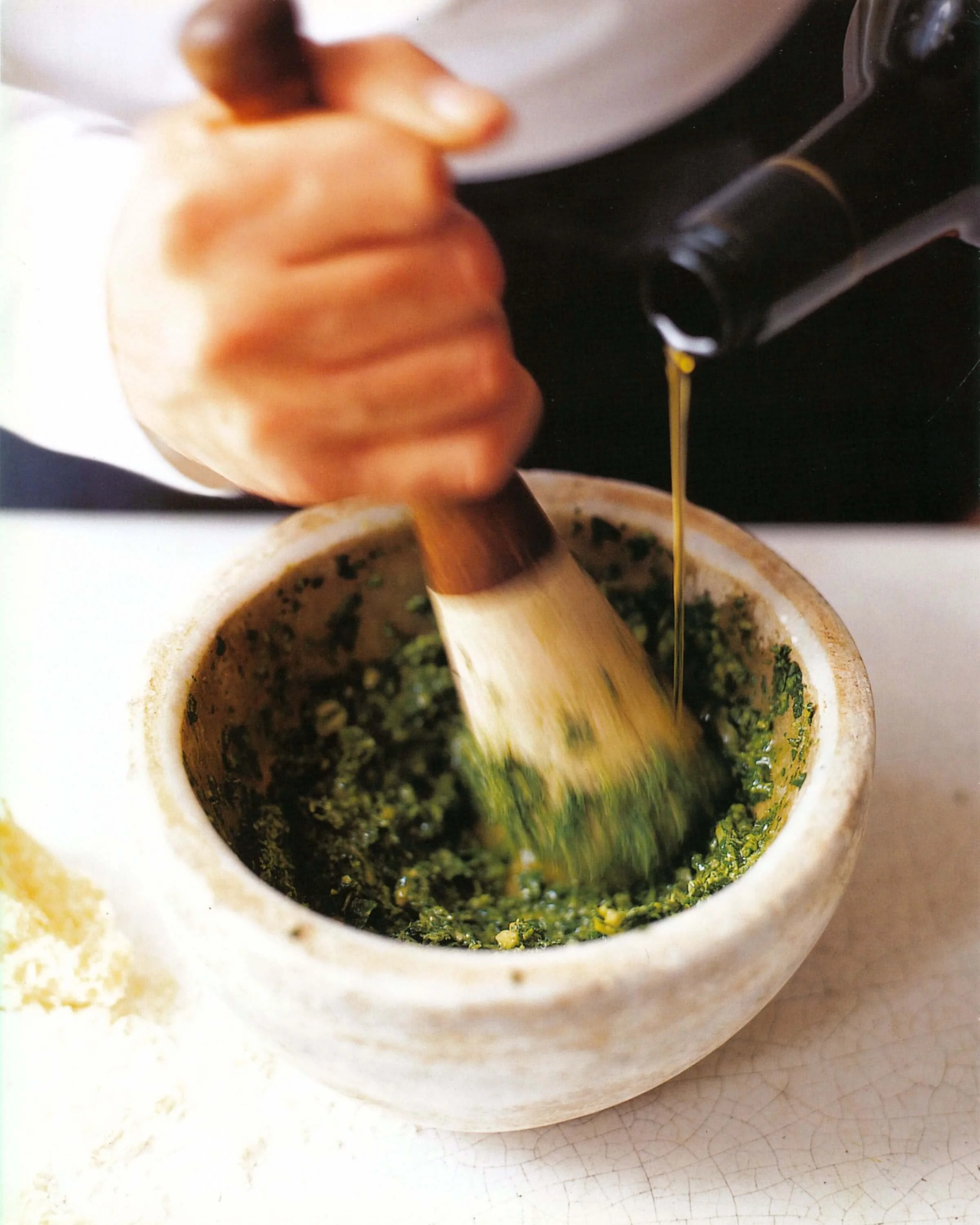
Get started with something that celebrates the season. Pesto, a perfect starter sauce for kids, is simple to make, (nearly) universally loved, and most importantly, revelatory—kids who love pesto pasta will be over the moon to learn they can make the pesto themselves.
Here’s a traditional version from Paul Gayler's Sauce Book (with pine nuts) and a French version - aka Pistou - without nuts, from Paula Wolfert. With a base of garlic, parmesan and olive oil, you can hardly go wrong! Switch out basil for any herb you have on hand (parsley, cilantro, arugula, mint or best yet, a combination) for a vibrant sauce that uses up whatever is left in the fridge. When my kids were young, we made our pesto with a mortar and pestle—somehow the extra work got them even more engaged and excited about making it themselves.
⇨ Charlie Cart Educators take note! There are three mortar and pestles provided on the Charlie Cart for exactly this purpose! And if you want a deep dive, see this recent ckbk feature for even more pesto ideas.
Dip it! When it comes to kids, interactive eating is where it’s at. So it stands to reason they may be more inclined to eat their veg (or whatever else) if they can dip it into a beguiling sauce. Green Goddess is both sweet and savory, and does double duty by packing in a lot of vegetables on its own. A standard rendition here from Oakville Grocery: The Cookbook (a California classic!) has anchovies; other versions use avocado—like Colu Henry’s recipe in Colu Cooks. Try both, or get some inspo from these recipes and then work with your kids to create a recipe tailor-made for your family. For more dipping adventures, check out Colman Andrews’s herby Homemade Ranch Dressing, and Nik Sharma’s Golden Za’atar Onion Rings with Buttermilk Caraway Dipping Sauce from Veg-table (YES, definitely make the onion rings too!).
⇨ Charlie Cart Educators take note! Dipping a variety of fresh produce into a delicious sauce is an easy way to conduct both a tasting and a cooking lesson with minimal steps and positive outcomes.
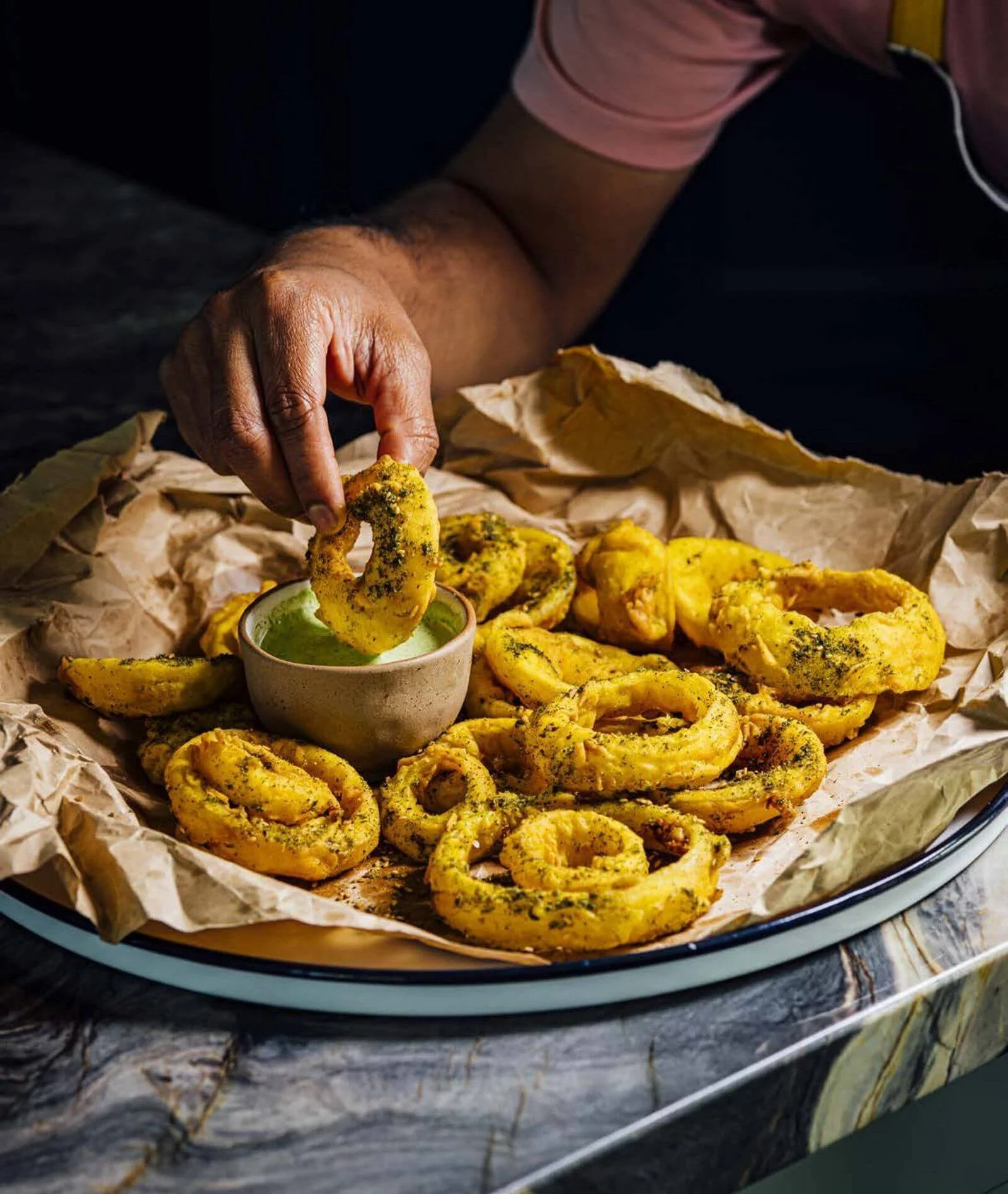
Golden Za’atar Onion Rings with Buttermilk Caraway Dipping Sauce from Veg-table by Nik Sharma
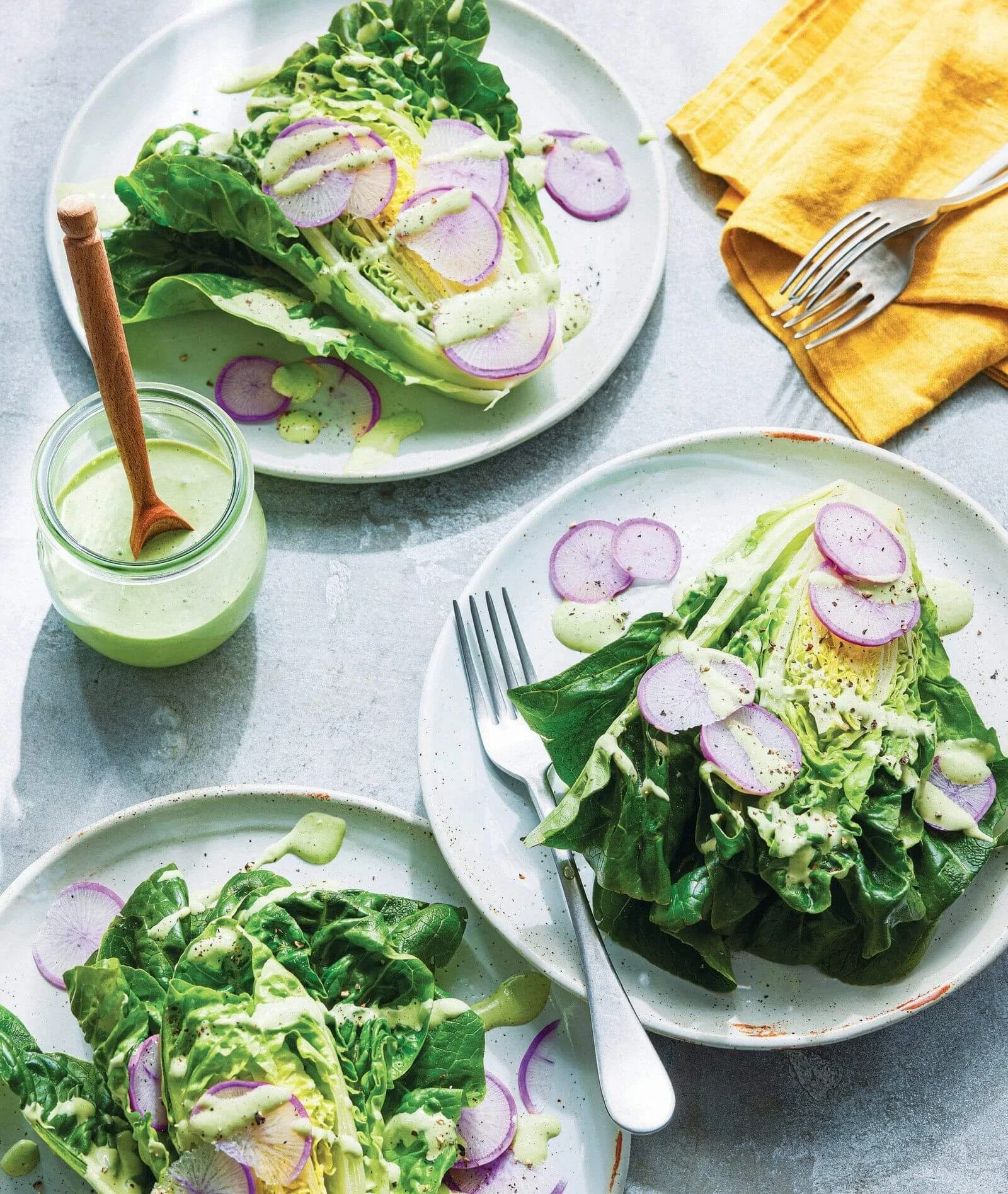
Little Gem Salad with Herbed Green Goddess from Oakville Grocery: The Cookbook
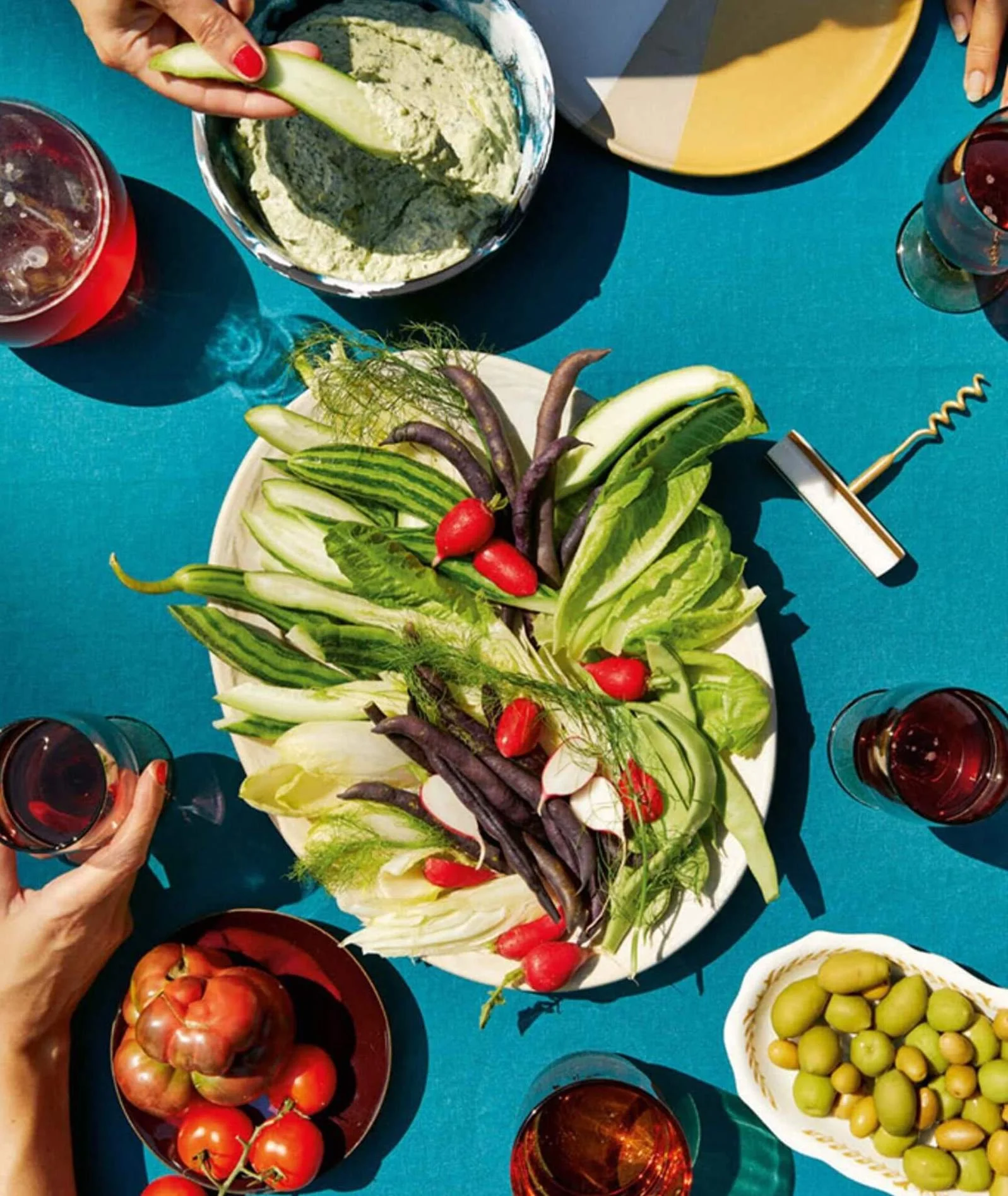
Green Goddess Dip with Celery Leaves Instead from Colu Cooks by Colu Henry
I’ve never met a kid who doesn’t like a tangy, salty, ginger-y dipping sauce typical of Chinese, Korean and Thai foods. Often sweetened with brown sugar, tangy with rice vinegar and spicy from fresh chilies, garlic and/or ginger, these sauces have something for everyone, come together in minutes and can easily be modified to suit your taste. Thai Spicy and Tangy Dipping Sauce (Nam Jim Jaew) from Asian Smoke is an elevated version with toasted and ground rice—a step many kids will find fascinating. In Korean Cooking Made Easy, Soon Young Chung keeps the dipping sauce for Korean Style pancakes simple but adds sesame seeds for chewy texture and extra nutty flavor. (YES, make the pancakes too!)
Curiosity is the key! Throughout my years of work in food education (teaching, writing, living and breathing cooking with kids) I’ve come to see their persistent curiosity as the ultimate open door to trying new things. So when it came to introducing a new dish to my own kids, I always tapped into that bottomless well of curiosity. There is a history, geography, math and science lesson in every sauce. If none of those are your specialty, pick a single ingredient from the recipe and google “Fun facts about [insert ingredient]” to spark their imagination and open their mind to the new foods on offer.
⇨ Charlie Cart Educators take note! Tap into your class's imagination with fun facts. Check the Charlie Cart curriculum or search, “history of [insert ingredient]” for inspiration.
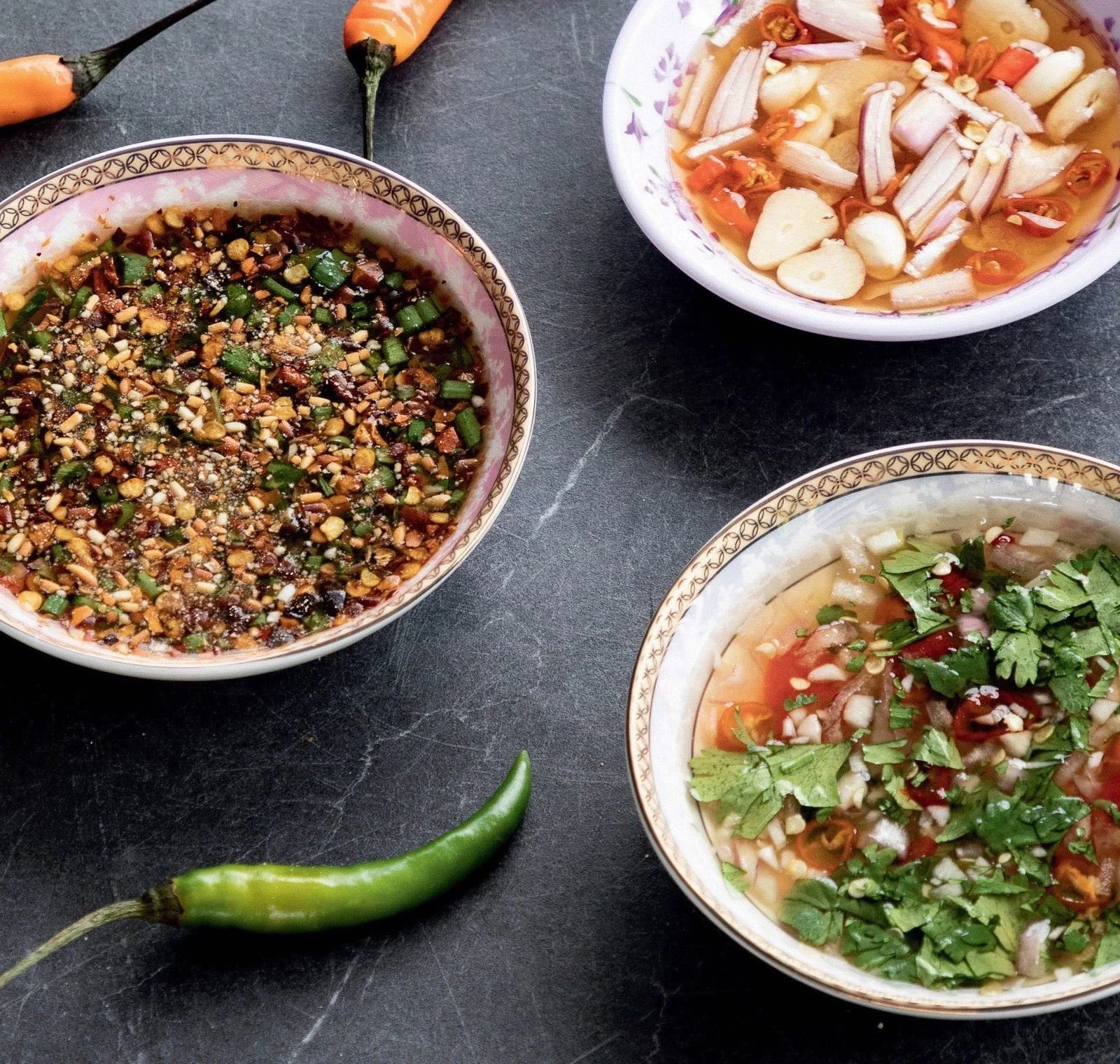
Thai Spicy and Tangy Dipping Sauce from Asian Smoke by Andrew Ho, Andrew Samia and Sean Wen
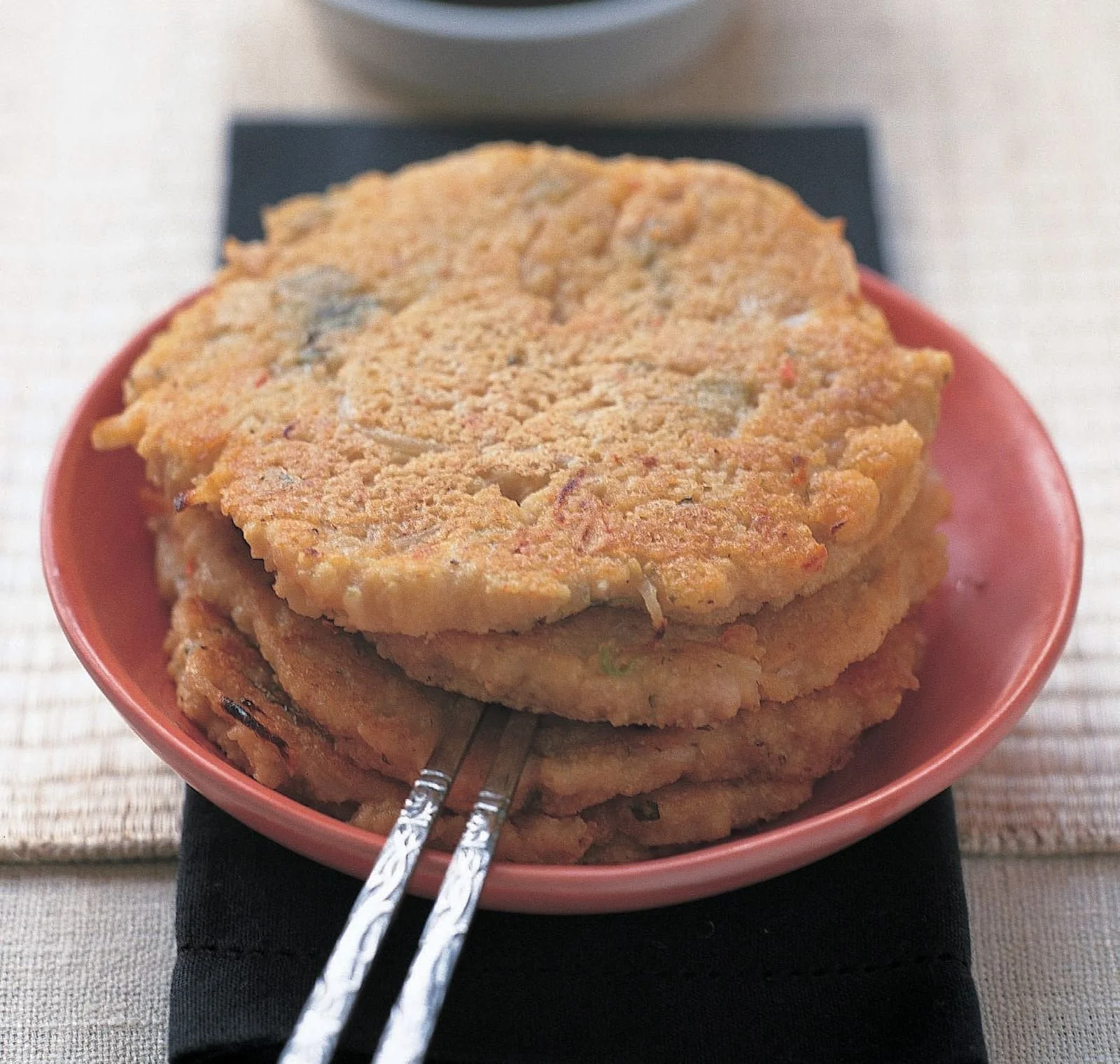
Pork and Kimchi Pancake Appetizer (with Dipping Sauce) from Korean Cooking Made Easy by Soon Young Chung
Sauces can transport you. These typical - absolutely delicious - red sauces, thickened with nuts, showcase the ingredients readily available in their respective regions. The Spanish staple Romesco (in Catalan, Salsa Vermella (“Red Sauce”) is found as far back as the Middle Ages when fishermen used it to supplement their daily catch. The sauce is made with almonds, hazelnuts and sometimes dried bread as thickeners and is a close relative of Muhammara (in Arabic: “Red Sauce”) from Aleppo, Syria, made with sweet and spicy red peppers and thickened with walnuts.
⇨ Charlie Cart Educators take note! These sauces are an ideal foundation for lesson plans in culture, history, geography, language and more.
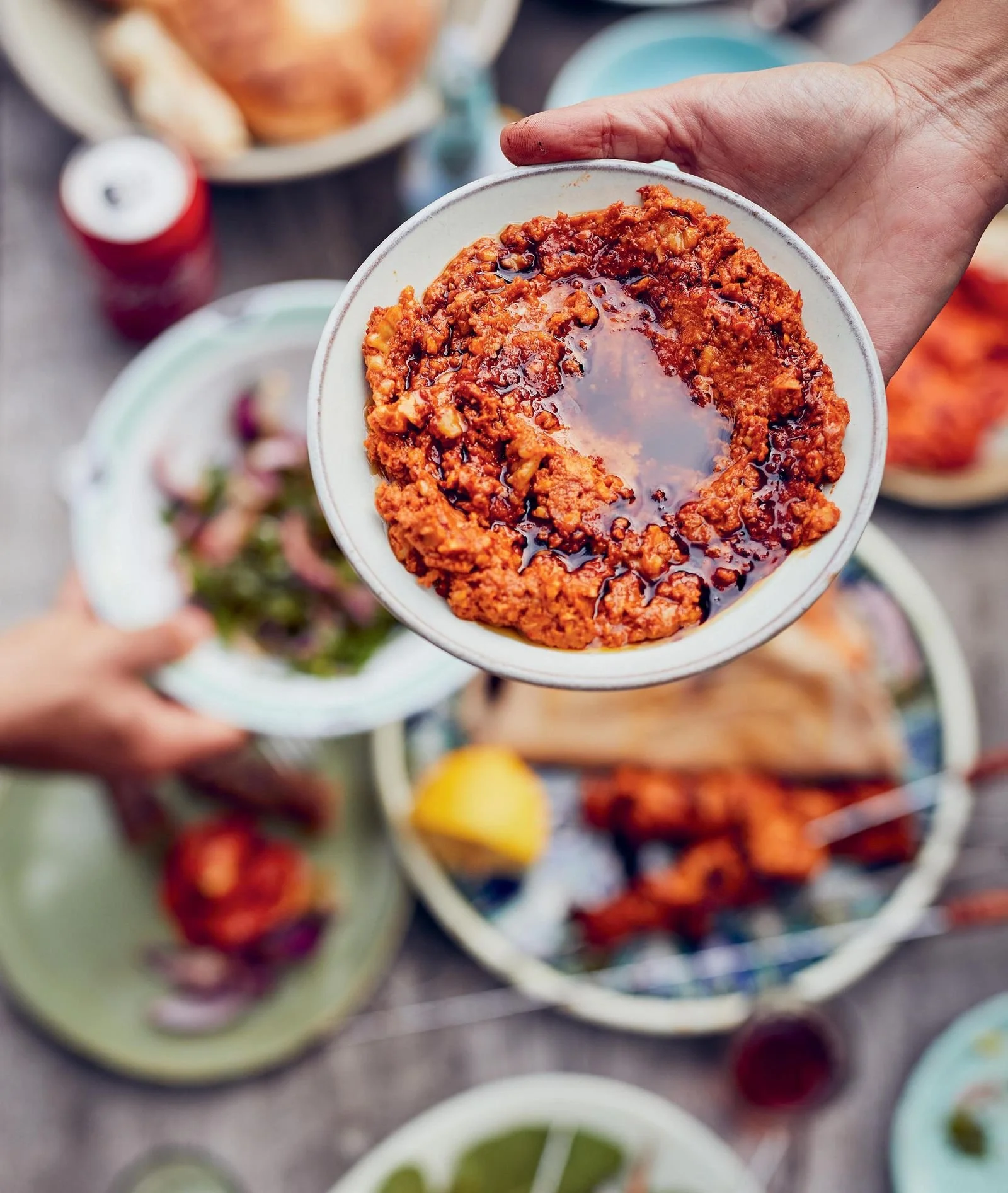
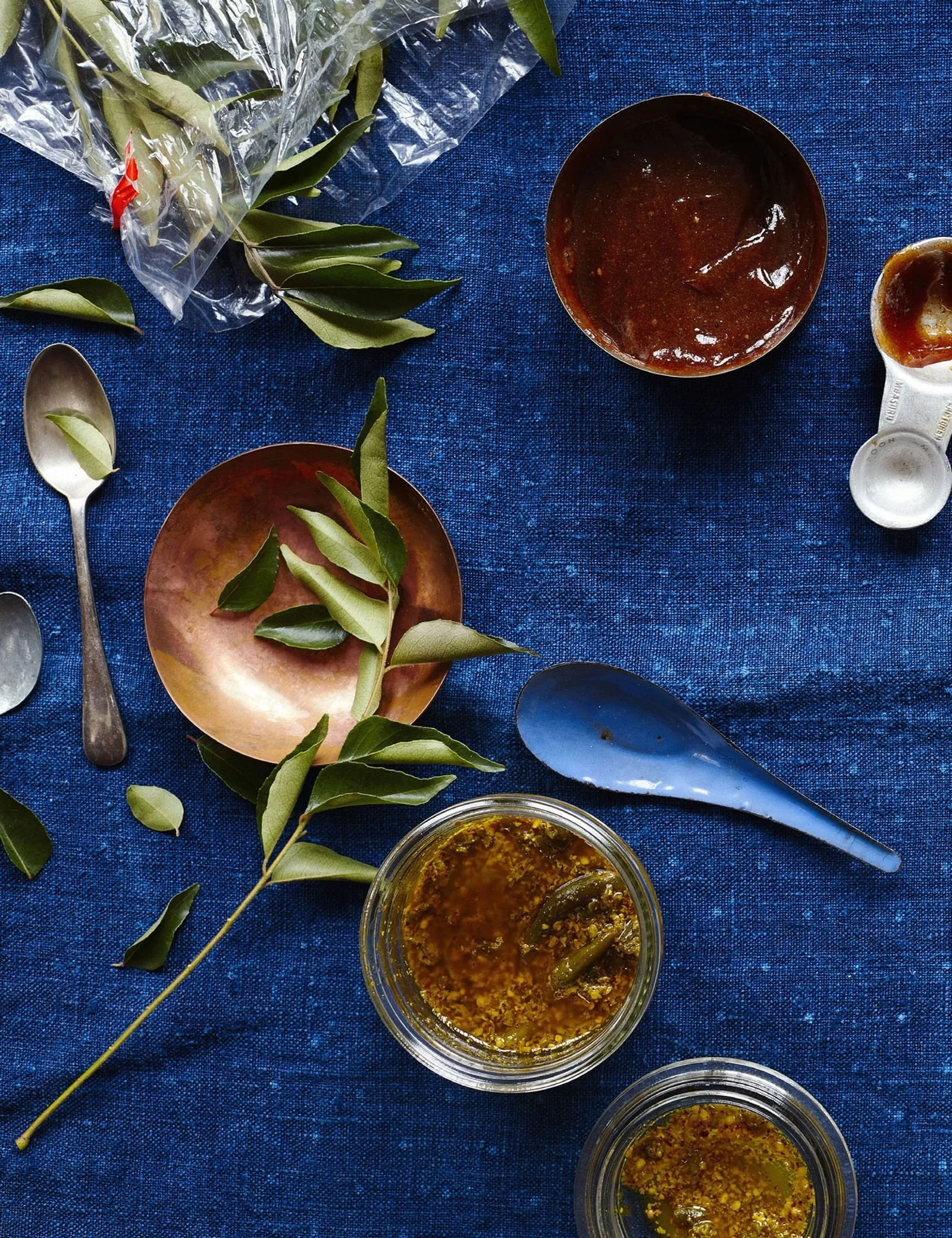
Cooked sauces and relishes move further into side dish territory for a quick and rewarding cooking lesson using minimal equipment and low and slow heat. Start with a sweet and savory chutney like Mowgli Chutney has a cooked tomato base that perfectly balances curry leaves, cumin and ginger to make this a relish you can eat by the spoonful. Make it as spicy as you (and your kids) like by adding to or eliminating the green chillies.
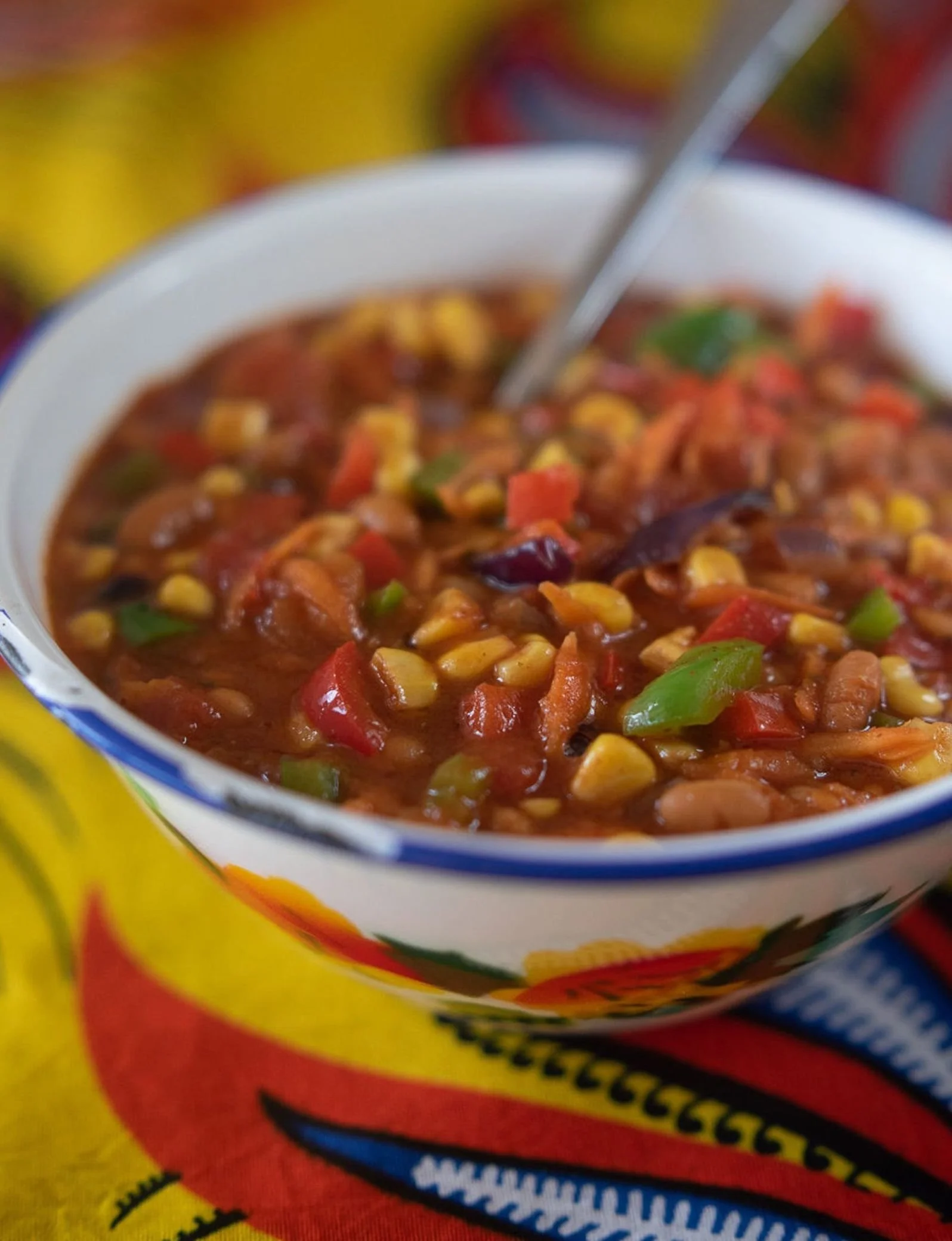
A “sauce” that is also a meal is my kind of sauce, and I could not resist adding a recipe for Chakalaka, because if anything will get a kid to try a food, it’s the appeal of a funky and intriguing name. And that is what you have with Chakalaka. Chakalaka, chakalaka, chakalaka. Say that 10 times fast! Chakalaka is a Kenyan “relish” made with baked beans that is most often served as a side dish but can also be a meal in itself. Lesego Semenya offers a simple version in Dijo that appeals to all the senses.
Our sauce compilation would not be complete without a sweet little something. Raspberry-Rose-Hip Sauce (Tȟakháŋheča na Uŋžíŋžiŋtka Iyúltȟuŋ) from The Sioux Chef’s Indigenous Kitchen by Sean Sherman is as simple and perfect as it gets. Cook the fruit, add syrup or honey to taste, run through a strainer, and serve. Drizzle this seasonal delight over cornbread, or drench your next batch of corn or buckwheat pancakes with these lightly sweetened springtime berries, or match it with savory dishes as a marinade for meat or a sweetener in dressing. Substitute blueberries, blackberries, chokecherries or any ripe berries in season.
⇨ Charlie Cart Educators take note! This is a traditional Lakota recipe and an easy introduction to lessons about Indigenous culture, foodways, history and the meaning of food sovereignty.
Have you tried making any of the above recipes with your children or class? How did it go? Let us know!
Featured recipes
About the author

Carolyn Federman is the founder of the Charlie Cart Project, a nonprofit that provides tools and curriculum for hands-on food education. Prior to Charlie Cart, Carolyn worked in food education for more than a decade, leading Alice Waters’s Edible Schoolyard Project, consulting on policy and program development for the Jamie Oliver Foundation, co-founding the Berkeley Food Institute, co-producing UC Berkeley’s Edible Education course with Michael Pollan, and teaching cooking in her children’s schools. Carolyn lives in Berkeley, California. Carolyn is the author of New Favorites for New Cooks (Ten Speed Press, 2018), a starter cookbook for children of any age.
More ckbk feature articles

The second part of ckbk and Charlie Cart’s Cooking with Kids series, looks at building basic kitchen skills
Pastry Chef Luciana Corrêa brings together handy hints drawn from ckbk’s baking bookshelf

Keep track of what you cooked and when, so you can track your discoveries and revisit the dishes you like most
Advertisement