
Advertisement
Tales from the Chopping Board: Triple Umami Potatoes
27 February 2026 · From the Chopping Board
In this latest in our occasional series of articles from ckbk subscribers, we feature this contribution from Anthony Humpage, an enthusiastic cook and YouTuber with a particular fondness for the cooking of Japan. Here he describes the genesis of one of his own favorite creations, ‘triple umami potatoes’.
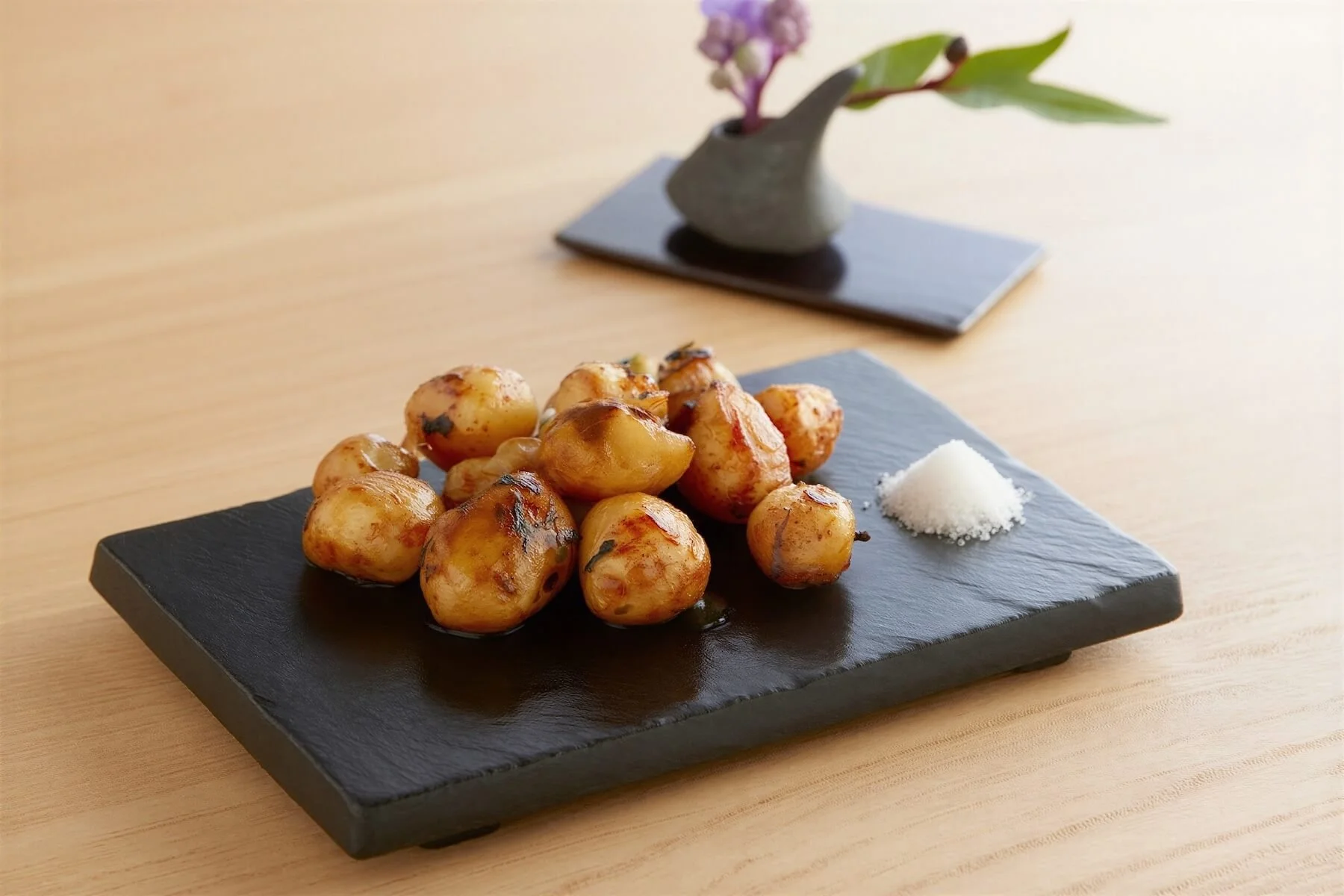

Ahhh.. the humble potato. How ubiquitous it is in Western meals, at least those in America, Canada, England, and some of Europe? This presentation is a little different, designed to focus on the potato, unlike most other dishes where the potato serves in a supporting role.
There are two versions of this dish. There's not much difference between them, but, I cooked one in my English kitchen and one in my American kitchen. Why am I telling you that? Not to impress you, but because the availability of ingredients is somewhat different between those two countries when we're talking about Japanese cuisine. And our dishes demonstrate, to a minor extent, those differences.
I was quite influenced in composing this dish by the Japanese concept of washoku. Washoku embodies a philosophy of harmony and respect for nature's bounty, where ingredients are prepared with minimal intervention to celebrate their inherent flavors, textures, and seasonal essence. In the context of dashi-simmered small potatoes with miso butter, this approach shines through as the delicate umami-rich dashi—crafted from kombu seaweed and bonito flakes, with the later addition of dried shiitakes—gently infuses the potatoes during simmering, creating a subtle savory foundation that amplifies their natural earthy sweetness without overwhelming it. The addition of miso butter, a fusion of fermented soybean paste and creamy butter, introduces a layer of nutty richness and gloss, yet remains restrained, allowing the potatoes to remain the focal point; this balance exemplifies Washoku's five principles—colors, flavors, textures, methods, and senses—ensuring each bite evokes a mindful appreciation for the humble potato with an interplay of traditional Japanese elements.
Does that sound a bit highfalutin to you? It might, but that's not my intention. All I'm really trying to tell you is we decided to make a dish focused on bringing out absolutely the best of small potatoes. So they could be served as a dish by themselves and stand on their own merits. I think we succeeded.
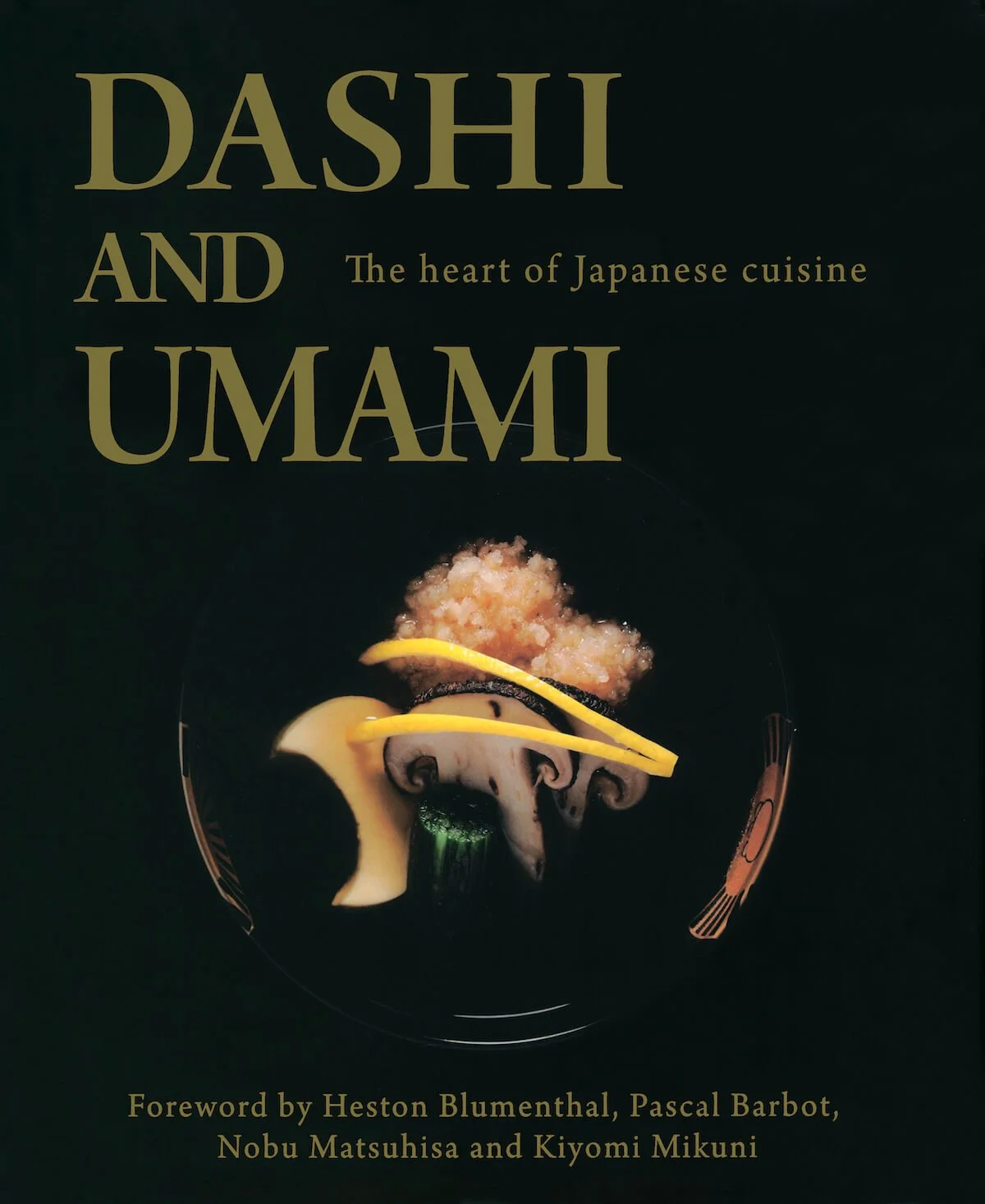
In my own work I try to be sparing about the use of the word umami. It's become something of a buzz word, especially in what I call the “glossy” cooking magazines, where I suspect a lot of the writers who throw that term around wouldn't know umami if it bit them on the ankle. Getting the straight dope on umami and almost inevitably when we talk about umami dashi can be difficult sometimes. ckbk springs to our assistance here, specifically allowing us to use the book Dashi and Umami. Written by Nobu Matsuhisa, Heston Blumenthal, and several other top-notch chefs, I really do consider this the seminal work on dashi and umami. Apparently, I am not the only person who thinks that, because although this book has long been out of print, it remains very much in demand. You will pay between somewhere between $180 and $300 for a used copy of this book. On eBay there is one hopeful seller offering a copy for $850. And yet it is included in your subscription to ckbk. If this is a subject that you're interested in, I strongly recommend that you read it cover to cover. I really appreciate ckbk offering this type of very focused book on cooking and food.
In our dish we very simply simmered (the Japanese term is nimono) our small potatoes, in dashi. As we started in our English kitchen, I left myself little time to do it. We prepared our dashi, kombu and katsuobushi first, started out potatoes to simmer, and then threw in three or four shiitakes to add their guanylate to the simmering dashi. I made a point of not letting the simmering liquid become too hot or vigorous because I absolutely did not want the potatoes to split or deform. They took about 20 minutes. I poked them with a bamboo skewer, and it was clear they were done, but still nicely firm and having a good texture. I personally believe texture is not quite as important as taste, but it adds a lot to the mouth feel and enjoyment of a dish, and hence, should not be overlooked.
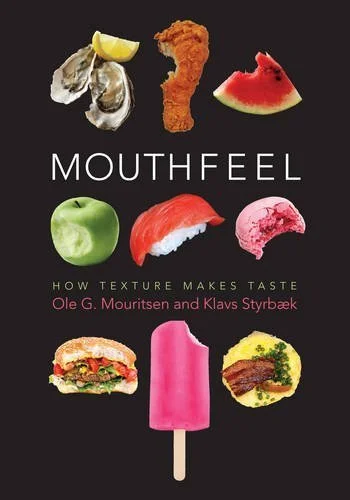
Mouthfeel by Ole G. Mouritsen and Klavs Styrbæk takes a deep dive into the role of texture in the sensory experience of food
We started out with the basic two ingredient awase dashi—kombu, and katsuobushi—and then later added our dried shiitakes. In most of the cooking literature that you'll read, dashi is held to be kombu and katsuobushi. If the proportions of kombu and katsuobushi are correct—roughly 50:50, that dashi by itself will increase the perception of umami in human beings by about seven or eight. Adding shiitakes to the dashi will give you another two to three times multiple of perceived umami in taste. So, we might well ask, why do most of the writings focus purely on kombu and katsuobushi? A lot of this is down to timing.
The omission of guanylate (from shiitake) in discussions of umamai ties to the timeline of scientific discovery. Umami as a concept was first identified in 1908 by Kikunae Ikeda, who isolated glutamate from kombu. Inosinate followed in 1913, discovered by Shintaro Kodama from katsuobushi. Guanylate, however, wasn't identified until 1957 by Akira Kuninaka, working with shiitake mushrooms at Yamasa Shoyu Research Laboratories. This later discovery meant that early literature on umami and dashi (pre-1960s) naturally emphasized the first two compounds, as guanylate's role wasn't yet understood. Even in modern contexts, discussions often prioritize the traditional kombu-katsuobushi base because it delivers sufficient umami for most culinary applications, and shiitake's inclusion is context-specific rather than universal. That said, contemporary research recognizes the value of all three for peak synergy, and some advanced dashi recipes do incorporate shiitake to leverage guanylate's contribution.
Because dried shiitakes bring something of an earthy flavouring, I thought this would be the perfect complement to our triple umami potatoes. I made sure they were included in the dashi for both the preparations.
In our first preparation, which I cooked in my English kitchen, I chose to use a yellow miso. I wanted a little stronger flavor in our miso butter than I thought white miso would offer, but, I didn't want to quite go all the way to red miso so I chose yellow miso. I bought these in packets from a supermarket, mixed it with beautiful French butter to make a miso butter 50/50 in terms of quantities, and upon mixing it up found that there were some dark things in the miso paste.
Well, it turns out this miso paste was meant for soup, so the well-meaning manufacturer threw some small pieces of wakame seaweed in there. Now I have to say I was not immensely pleased with this initially, but, went ahead and used it because it was what I had. Now that I reflect though, I really like both the visual and frankly the minimal taste edition of the seaweed in this dish. As you will see I carried it over into the second iteration that I cooked in our American kitchen.
Now, having gently simmered these mini potatoes in dashi, coated them with yellow miso butter with a little bit of wakame seaweed in there, you've probably done quite enough. These potatoes stood up well as a standalone dish as I hope you can see in the photographs. However, I sometimes cannot leave well alone and decided just to go for a figurative home run and decided I'd get more glutamates via some very thinly sliced shavings of organic parmesan cheese. Yes, it really was a delightful dish. If you don't want to bother with the parmesan shavings, you’ll be fine. I just really had to push the envelope a little bit and it worked. They were extremely tasty, but I was very sparing with the cheese, as you can see how much of the parmesan I added. These flakes were added individually to the potatoes; they weren't sprinkled. It took a bit of time, but I wanted to get it right.
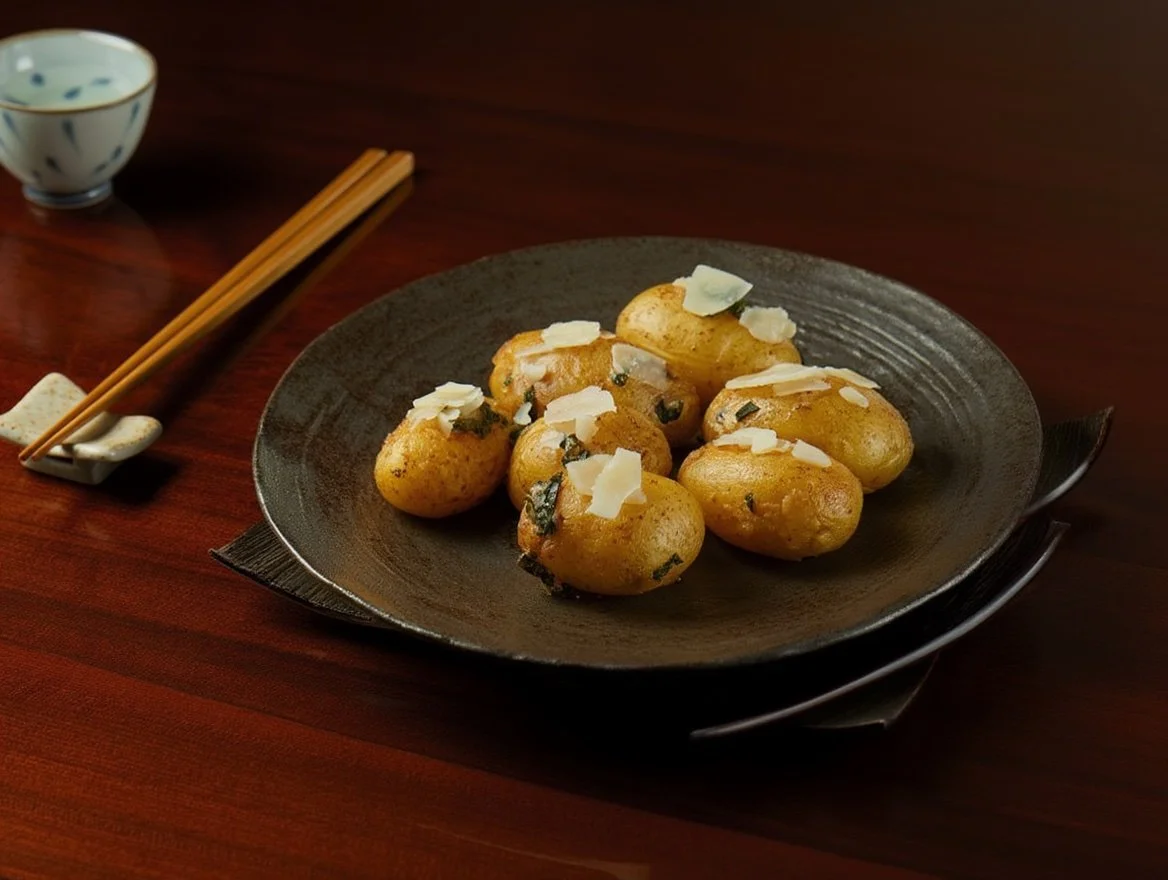
The second iteration of this dish, which we cooked in our American kitchen, used red miso for the miso butter. The dashi was homemade, from kombu, katsuobushi, and dried shiitakes, cold infused from the kombu; a very, very fresh tasting dashi.
Having decided that I liked the inclusion of seaweed in the English version, I threw in some pieces of Hijiki seaweed—which I always think of as an Okinawan inclusion—into the potatoes and tumbled them with the potatoes in the red miso butter. I really think I liked the red miso butter version with the Hijiki seaweed a little better. Slightly deeper flavour, very, very tasty, and both potato dishes stand up very well to be offered as an individual serving, especially, perhaps, Izakaya-style as shown below.
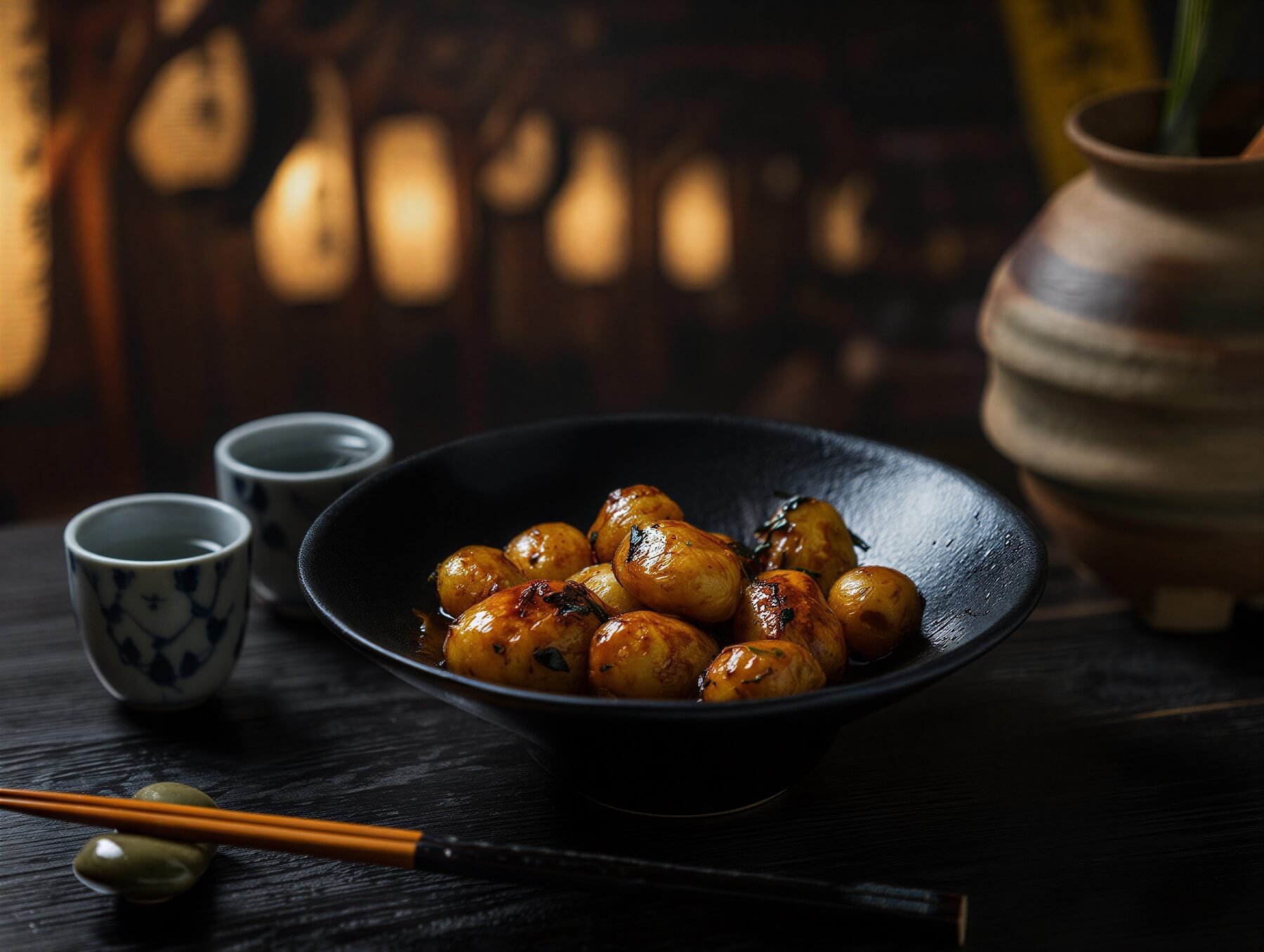
I might also add that using small potatoes allows you to pick them up individually with a pair of chopsticks to take a bite and not have to hack away with a knife and fork at the table if you're really trying to eat or serve in Japanese style.
If you are thinking of trying either of these dishes in the U.S. a great source for small white potatoes is Trader Joe's. You could also use reds or even fingerling potatoes, though I haven’t tried those. Most supermarkets in the UK have bags of mini potatoes, which are often sold as salad potatoes.
About the author
Anthony Humpage can be found on YouTube as The Eclectic Chef. He is an enthusiastic subscriber to ckbk and this article was not sponsored in any way by ckbk.
Popular recipes from Dashi and Umami
More from features from ckbk

Look back on the recipes you’ve cooked to track your progress, and to see which dishes are due to be repeated
Food writer and Japan enthusiast Lisa Gershenson celebrates the profound and indelible impact this book had on her approach to cooking

ckbk speaks to the author of Odd Bits about the eclectic subjects covered by her cookbooks, and the joys of nose-to-tail eating
Advertisement